


Night Guards
Nighttime protection against teeth grinding
What is a dental splint?
Bruxism is a functional disorder characterized by grinding, crunching, or clenching teeth unconsciously. It can affect all types of people, being more common in adults. In fact, it is estimated that around 70% of the adult population suffers from bruxism. Although its causes are not fully known, stress and sleep disorders are the main causes of bruxism. Known also as the silent disease, it can cause headaches, jaw pain, and ear pain, as well as dental problems such as wear.
The causes of bruxism are varied and can combine different physical, psychological, and genetic factors. Although they are not exactly known, the most common trigger is stress. Other causes of bruxism include anxiety, depression, and alcohol or drug use. Likewise, bruxism is related to dental malocclusion and sleep disorders such as obstructive sleep apnea syndrome.
Bruxism treatments help prevent its consequences. If we cannot relax the jaw, some of the consequences we may suffer:
- Dental wear which mainly affects dental sensitivity, as well as tooth fracture or loss.
- Jaw pain caused by the muscle tension exerted.
- Headache also generated by muscle tension, affecting the temporal and posterior area of the head.
- Sleep quality problems as it can interrupt the person's sleep.
- Temporomandibular joint problems causing clicking when opening and closing the mouth, facial pain, and difficulty eating or speaking.
Therefore, muscle relaxation treatments for bruxism can improve the quality of life of people who suffer from it.
A dental splint is a dental device used to treat and prevent various disorders related to the temporomandibular joint (TMJ), jaw muscles, and teeth. It is also known as an occlusal splint, occlusal plate, interocclusal splint, or simply a splint.
The dental splint is a customized appliance that is placed in the mouth and covers the upper or lower teeth, or both, depending on the patient's needs. Its main objective is to provide adequate support to the jaw joint and relieve tension in the jaw muscles.
Dental splints are used for a variety of purposes, including:
- Treatment of TMJ disorders: They help reduce symptoms of temporomandibular disorders, such as jaw pain, joint clicking or crepitation, limited mouth opening, and jaw locking.
- Tooth protection: Dental splints are used as tooth protectors to prevent excessive wear of teeth due to bruxism (teeth grinding) or involuntary jaw clenching.
- Muscle pain relief: They help relax the jaw muscles and reduce muscle tension, which can relieve facial and headache pain associated with TMJ disorders.
- Bite correction: In some cases, dental splints can also be used to correct bite problems, such as malocclusion or dental misalignment.
Dental splints are usually custom-made by a dentist or a TMJ disorder specialist. The manufacturing process involves taking impressions of the patient's teeth and jaw to create a splint that fits correctly and provides adequate support.
It is important to note that the use of a dental splint should be supervised by a dental health professional, who will determine the need for this device and provide instructions on its proper use and maintenance.

What is the procedure for making a dental splint?
The process for creating a dental splint involves an initial evaluation, taking dental impressions, bite registration, custom design, and laboratory manufacturing. Then, it is carefully adjusted to ensure comfort and proper alignment. Finally, instructions for its use and maintenance are provided, followed by follow-up to evaluate its effectiveness and make adjustments if necessary. This procedure is adapted to each patient for precise and effective treatment.
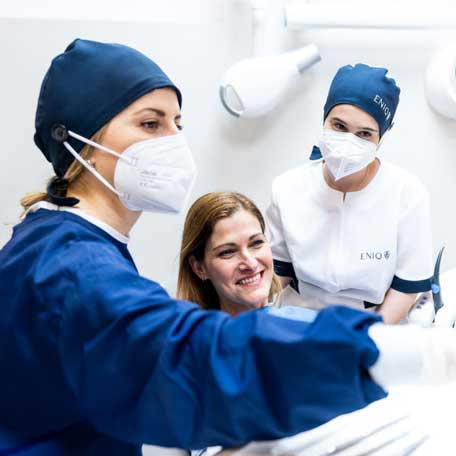

Procedure for making a dental splint:
Evaluation and diagnosis
First, a dental evaluation and temporomandibular joint (TMJ) evaluation is performed by a dentist or TMJ disorder specialist. This includes a review of the patient's symptoms, a dental examination, and an evaluation of occlusion (how the upper and lower teeth fit together).
Taking impressions
Once the diagnosis is made, impressions are taken of the patient's upper and lower teeth. This is done using an impression material that is placed in the mouth and held for a few minutes until it hardens and an accurate impression of the teeth and oral structures is obtained.
Bite registration
The bite relationship between the upper and lower teeth is recorded using a bite registration material. This is done to ensure that the splint fits correctly and provides proper jaw positioning.
Splint design and fabrication
With the impressions and bite registration, the custom dental splint is designed and manufactured. This is done in a dental laboratory using resistant and durable materials, such as acrylic, which are molded and adjusted according to the patient's specifications.
Adjustment and placement
Once the dental splint has been manufactured, careful adjustment is made to ensure that it fits comfortably in the patient's mouth. The dentist or specialist makes the necessary adjustments to ensure proper placement and balanced occlusion.
Instructions for use and follow-up
The patient is given instructions on how to use and care for the dental splint. This includes information about the duration of use, proper cleaning, and necessary care. Follow-up appointments are also scheduled to evaluate the patient's progress and make any additional adjustments if necessary.
It is important to note that the availability of digital anesthesia may vary depending on the dental office and geographical location. If you are interested in this type of anesthesia, I would recommend talking to your dentist to determine if they offer this service and if it is appropriate for your specific case.
What is the success rate of the dental splint?
What are the benefits of getting a dental splint at ENIQ?
Undergoing bruxism therapy at a center with technology can offer several significant benefits. Some of them are mentioned below:
- Accurate diagnosis Centers with advanced technology can use various tools and equipment to make an accurate diagnosis of bruxism. These can include X-rays, digital scanners, bite registrations, and computerized analysis of the jaw and muscles. An accurate diagnosis is essential to determine the type and underlying cause of bruxism, which allows for a more effective treatment approach.
- Personalized treatment Centers with advanced technology can offer personalized treatments adapted to the individual needs of each patient. Technology allows for the manufacture of high-quality and precision dental splints and support devices, which fit perfectly to the patient's mouth. This ensures greater comfort, better effectiveness, and optimal results in bruxism control.
- Monitoring and follow-up The technology used in specialized bruxism centers allows for more effective monitoring and follow-up of treatment progress. Digital records and data analysis can be used to evaluate the effectiveness of therapy over time. This helps the professional make necessary adjustments and modifications to optimize results.
- Complementary treatments Centers with advanced technology can offer additional complementary treatments that can help manage bruxism. These can include low-intensity laser therapy to relieve muscle and joint pain and inflammation, ultrasound therapy, electrostimulation, and other advanced techniques that promote muscle relaxation and tension reduction.
- Education and counseling Specialized centers with technology can also provide appropriate education and counseling about bruxism. They can provide detailed information about the causes of bruxism, triggers, relaxation techniques, and strategies for managing stress. This helps the patient better understand their condition and adopt long-term preventive measures.
It is important to note that technology alone does not guarantee treatment success for bruxism. The experience and skill of the professional are essential for a comprehensive and effective approach. Therefore, it is advisable to look for a specialized center with technology and trained professionals in bruxism management to obtain the best results.
What is the price of a dental splint?
Dental splints in Spain usually range from €150 to €650 depending on the material and technique used.
Dental splint
Dental rest
The specialized solution to protect your teeth and relieve bruxism! Customized for your comfort and designed to prevent dental wear.
All inclusive

FAQ
Preguntas frecuentes sobre la ferula de descarga
Resuelve tus dudas sobre la ferula de descarga en Madrid. customer service.